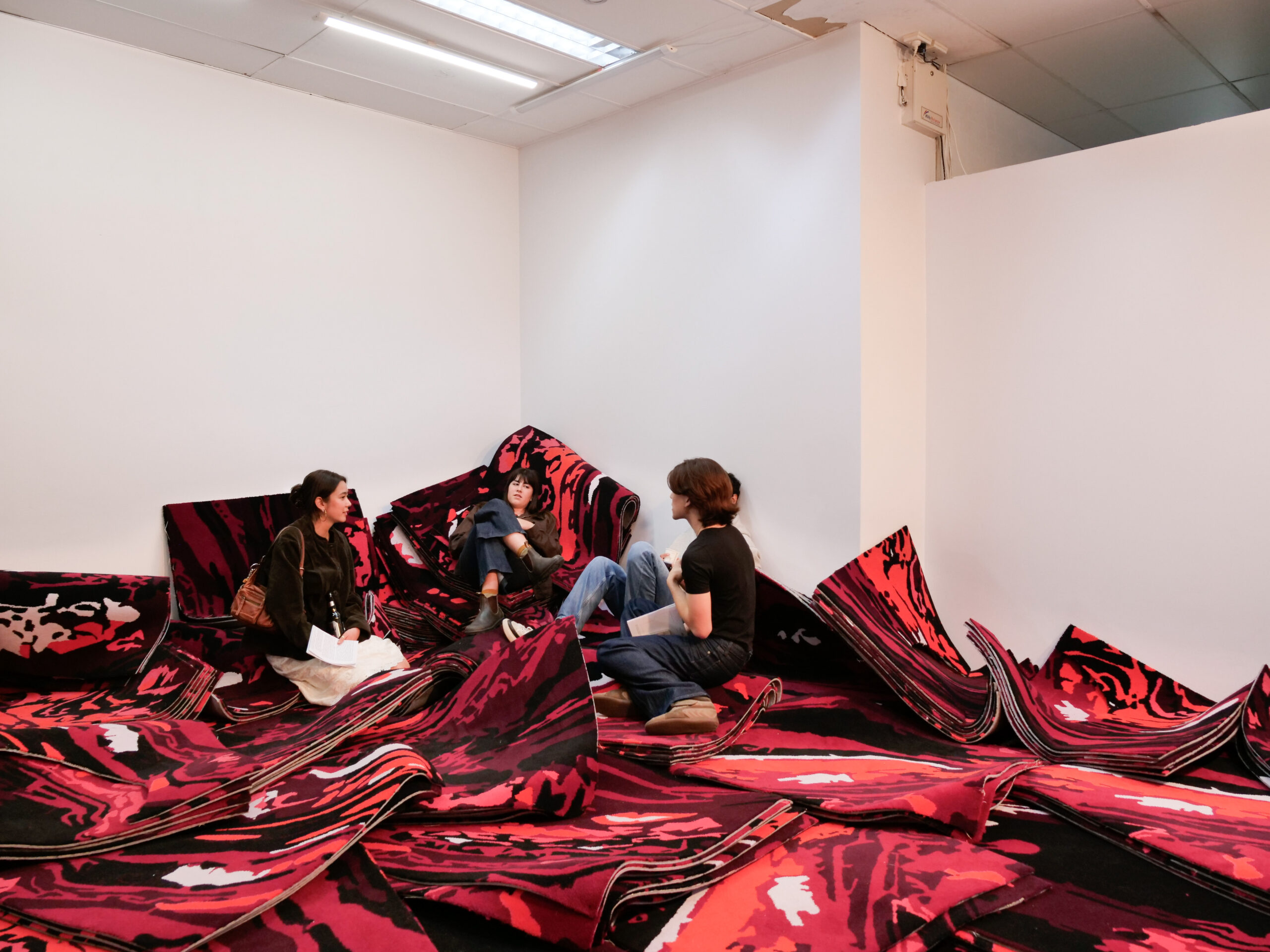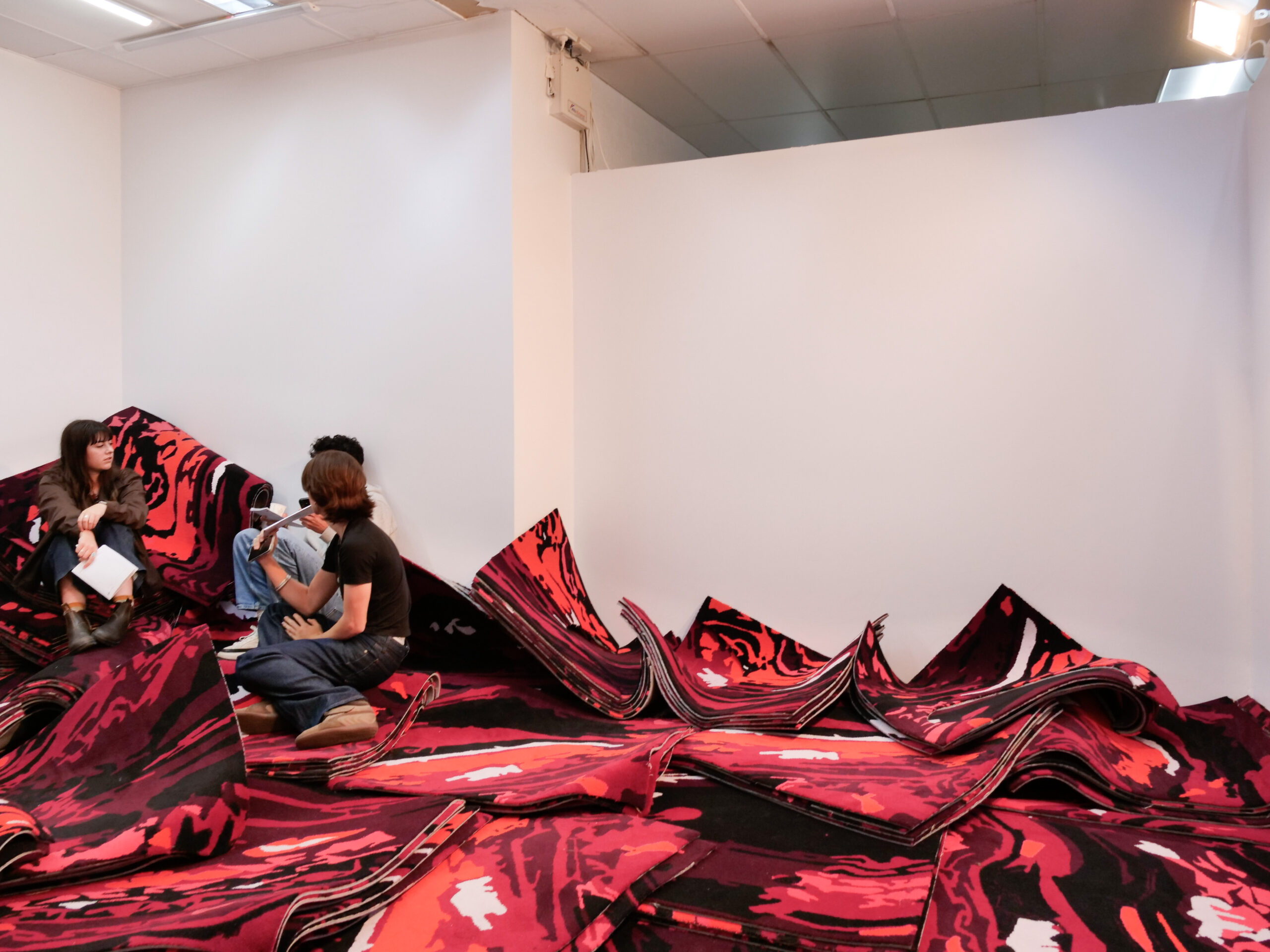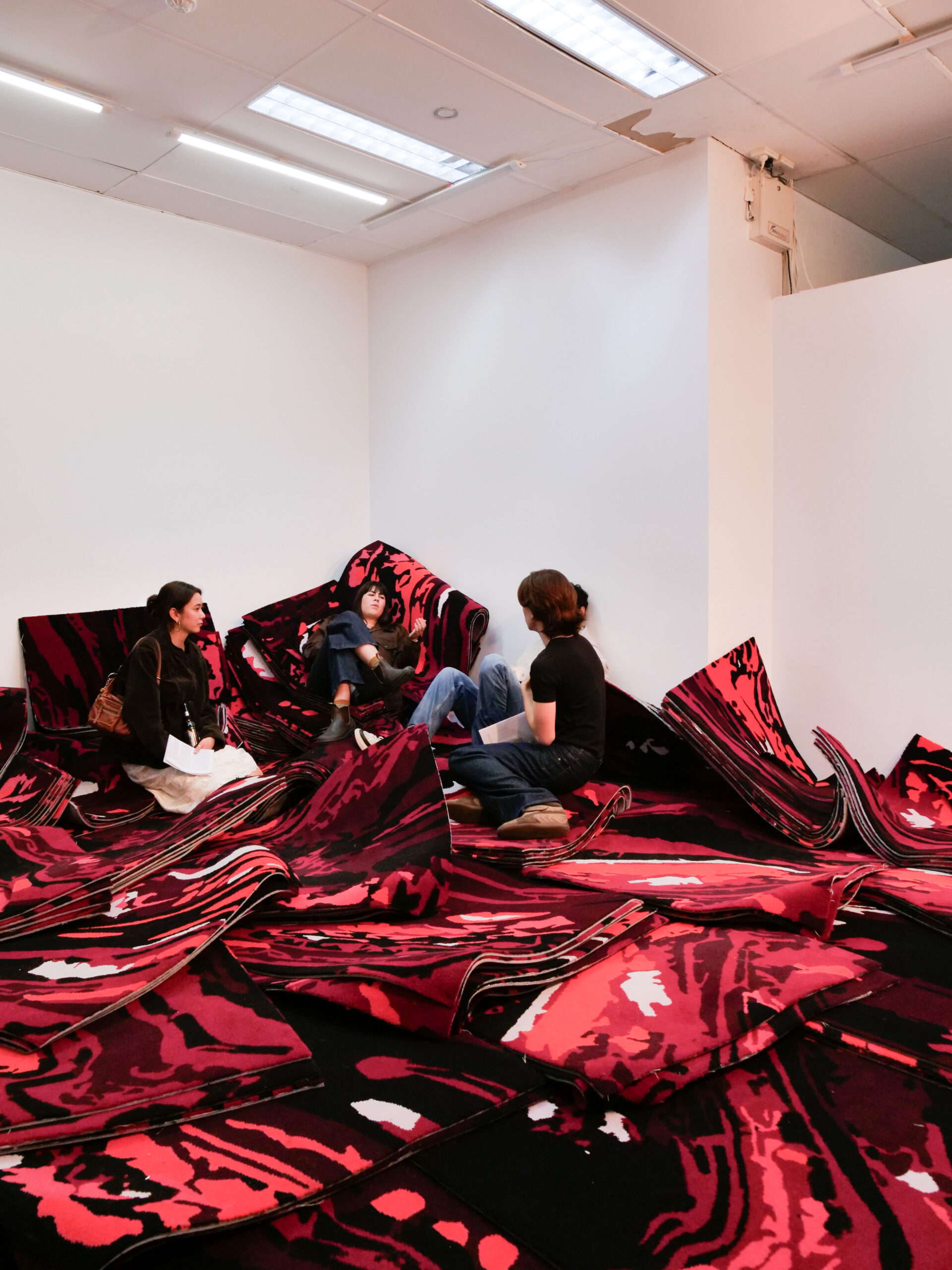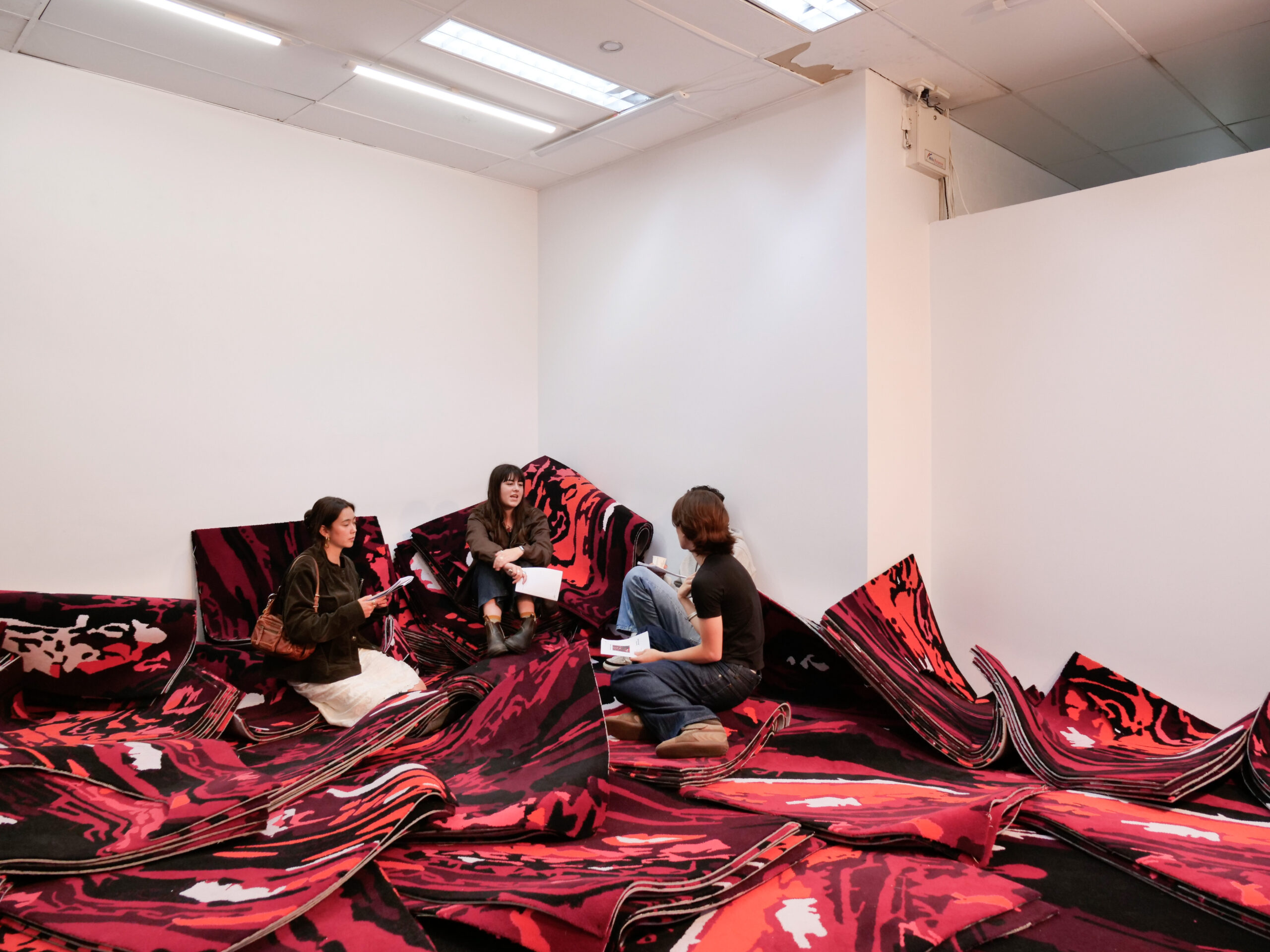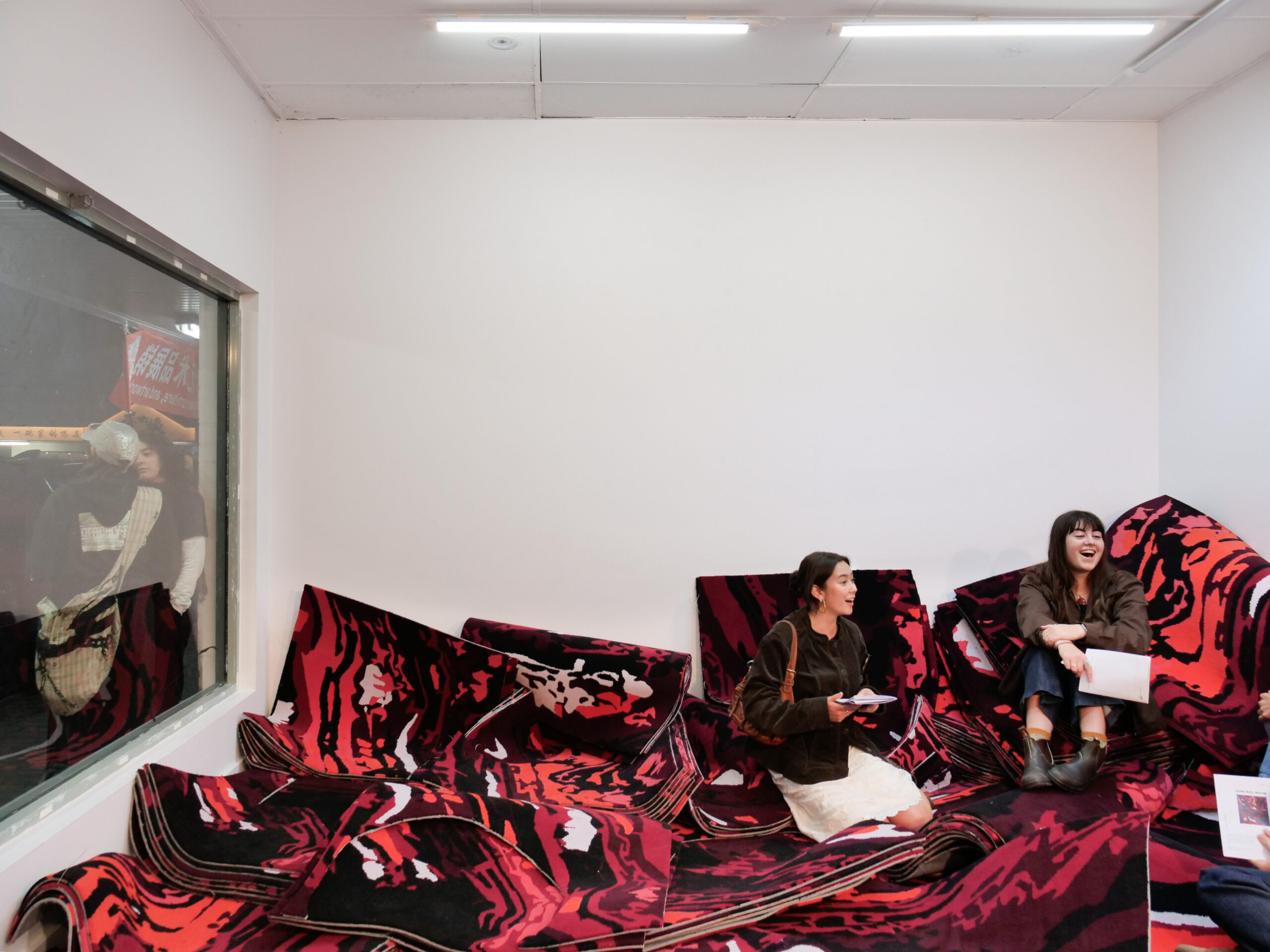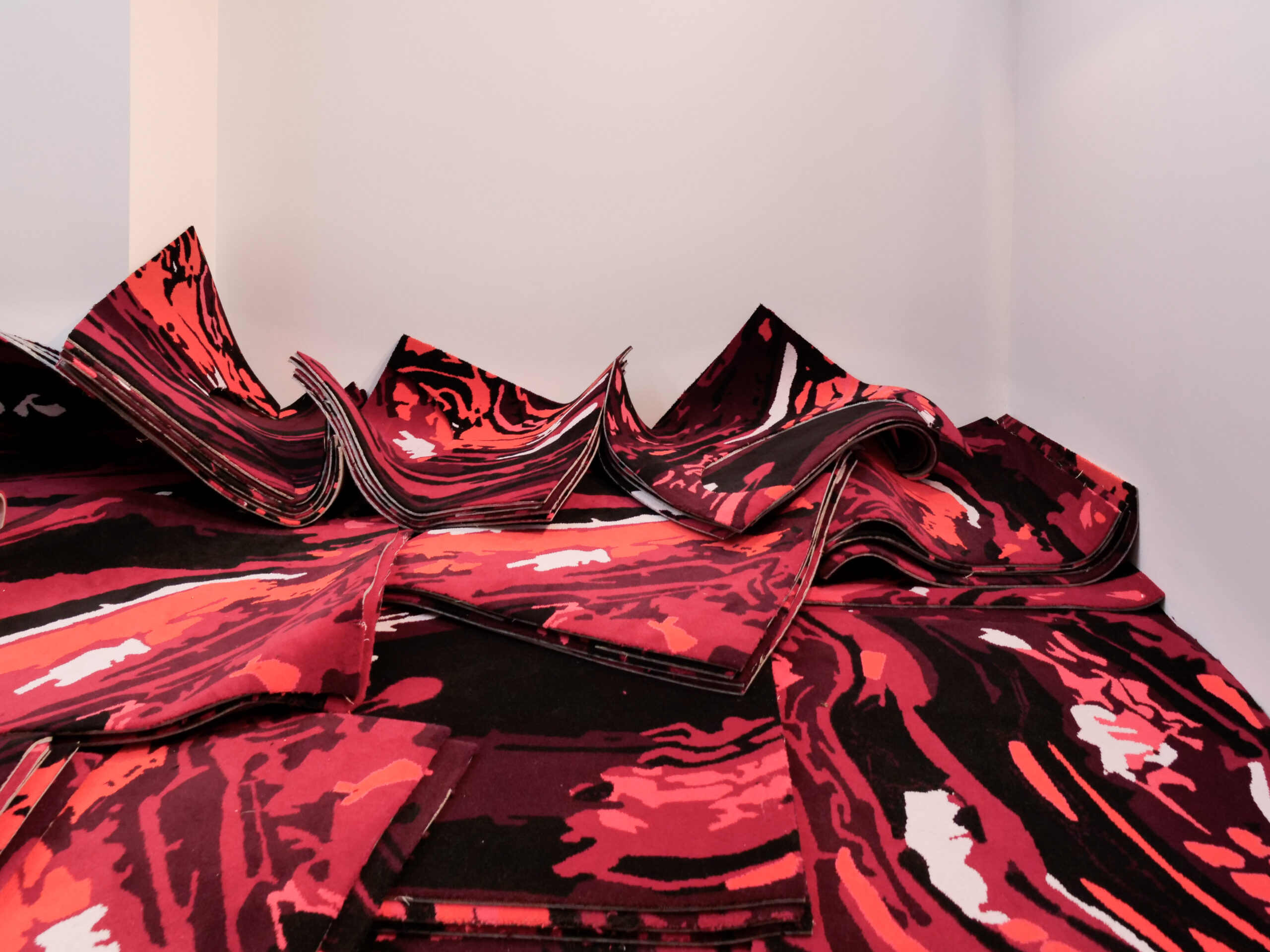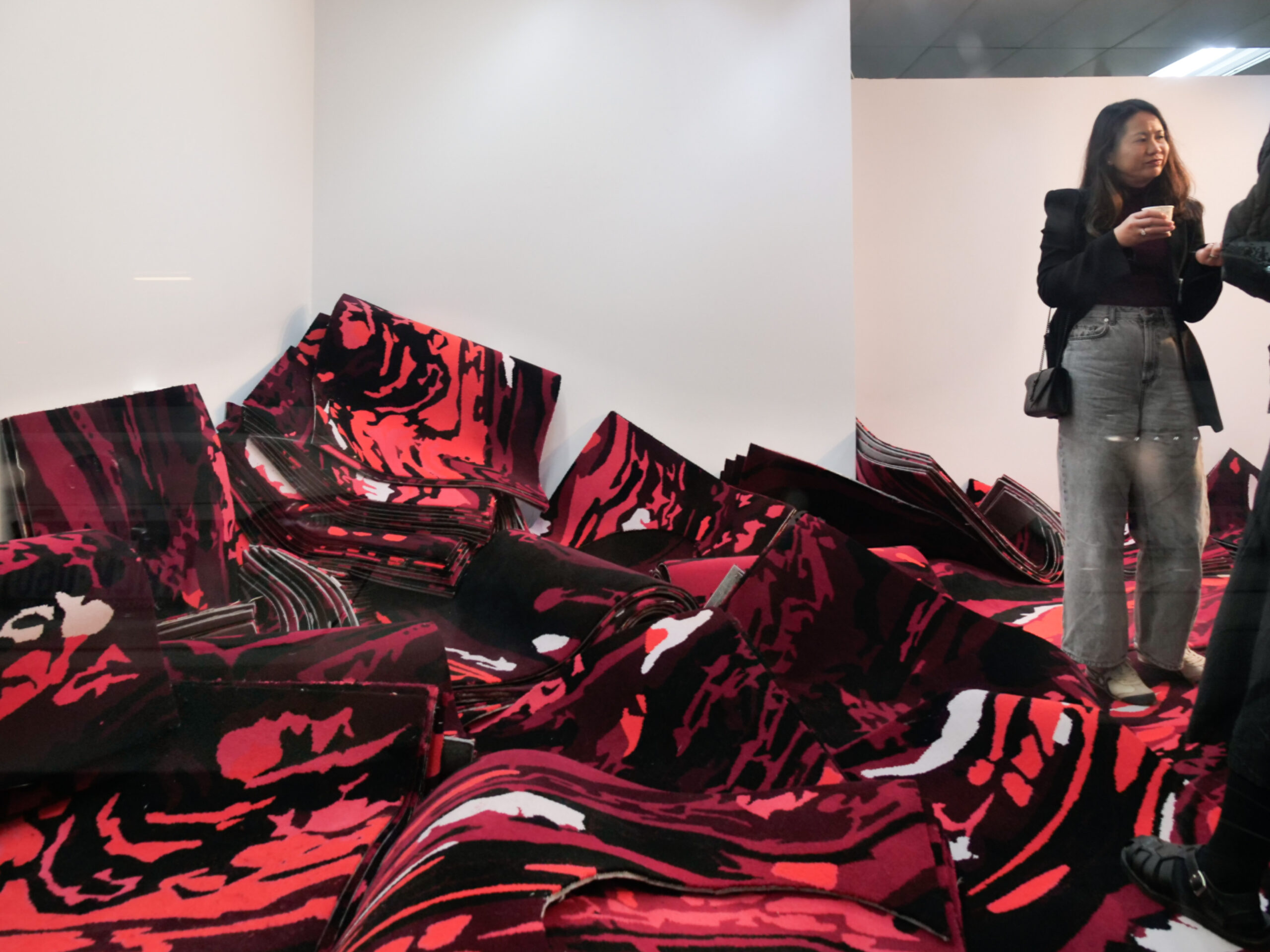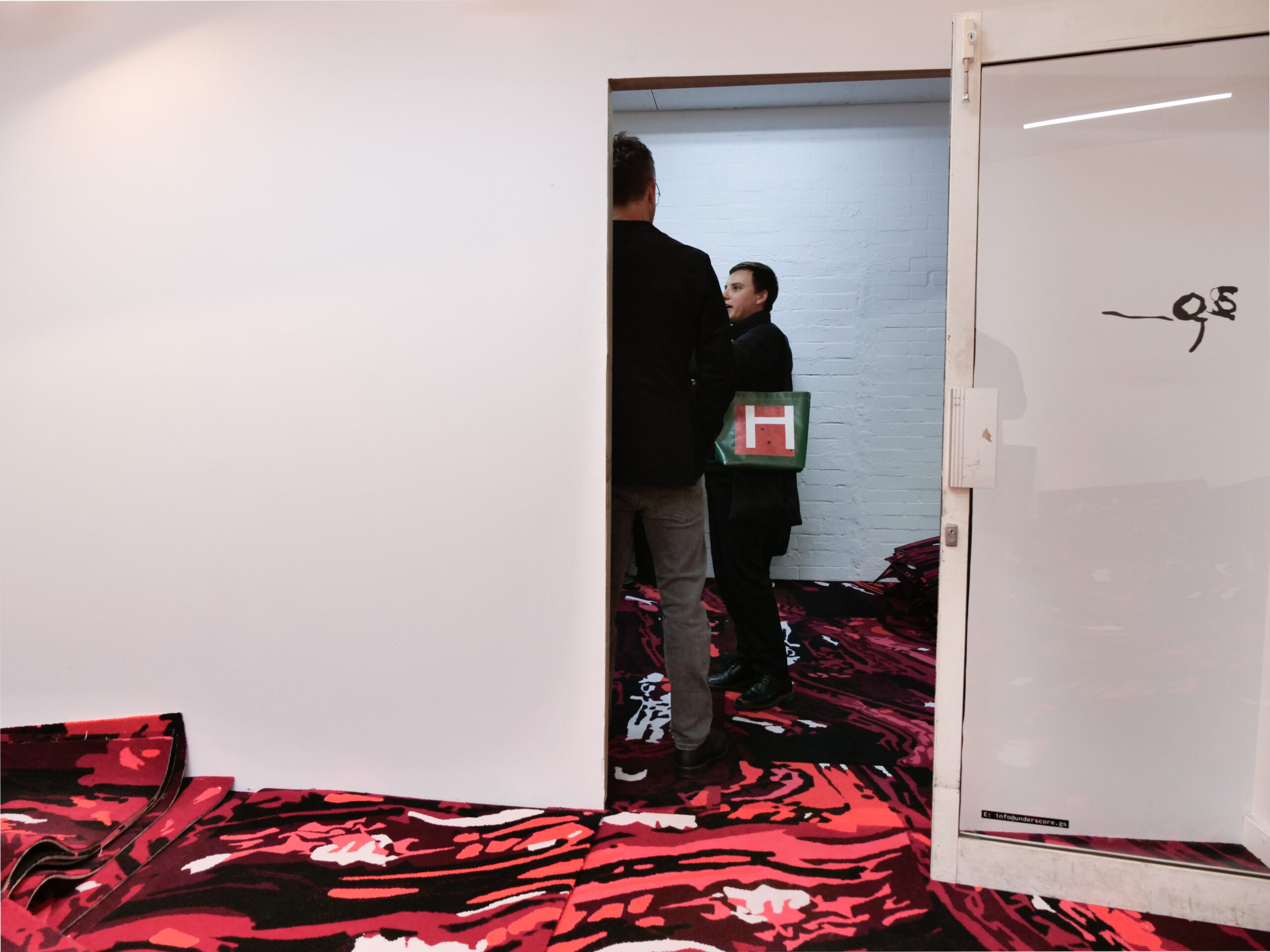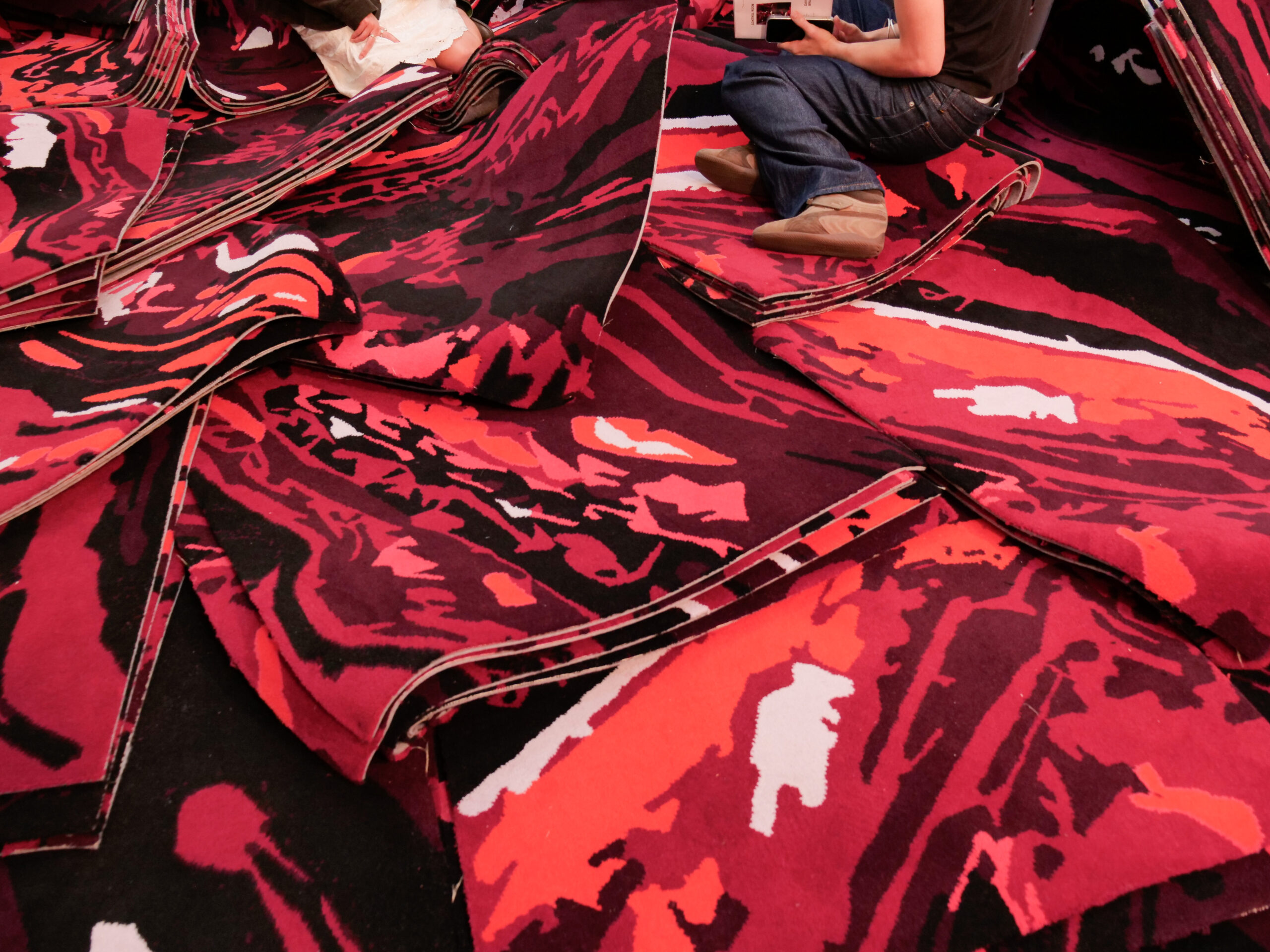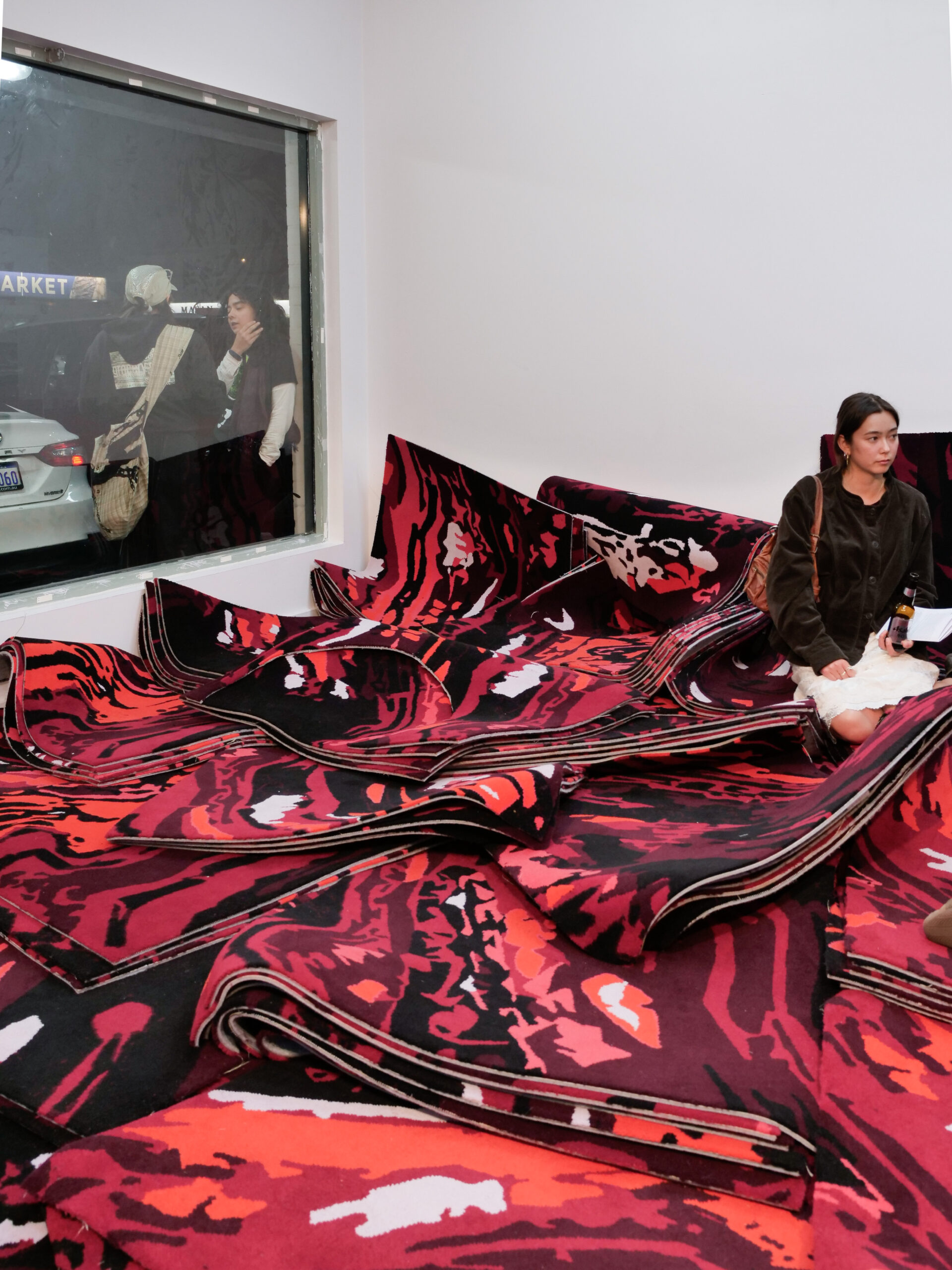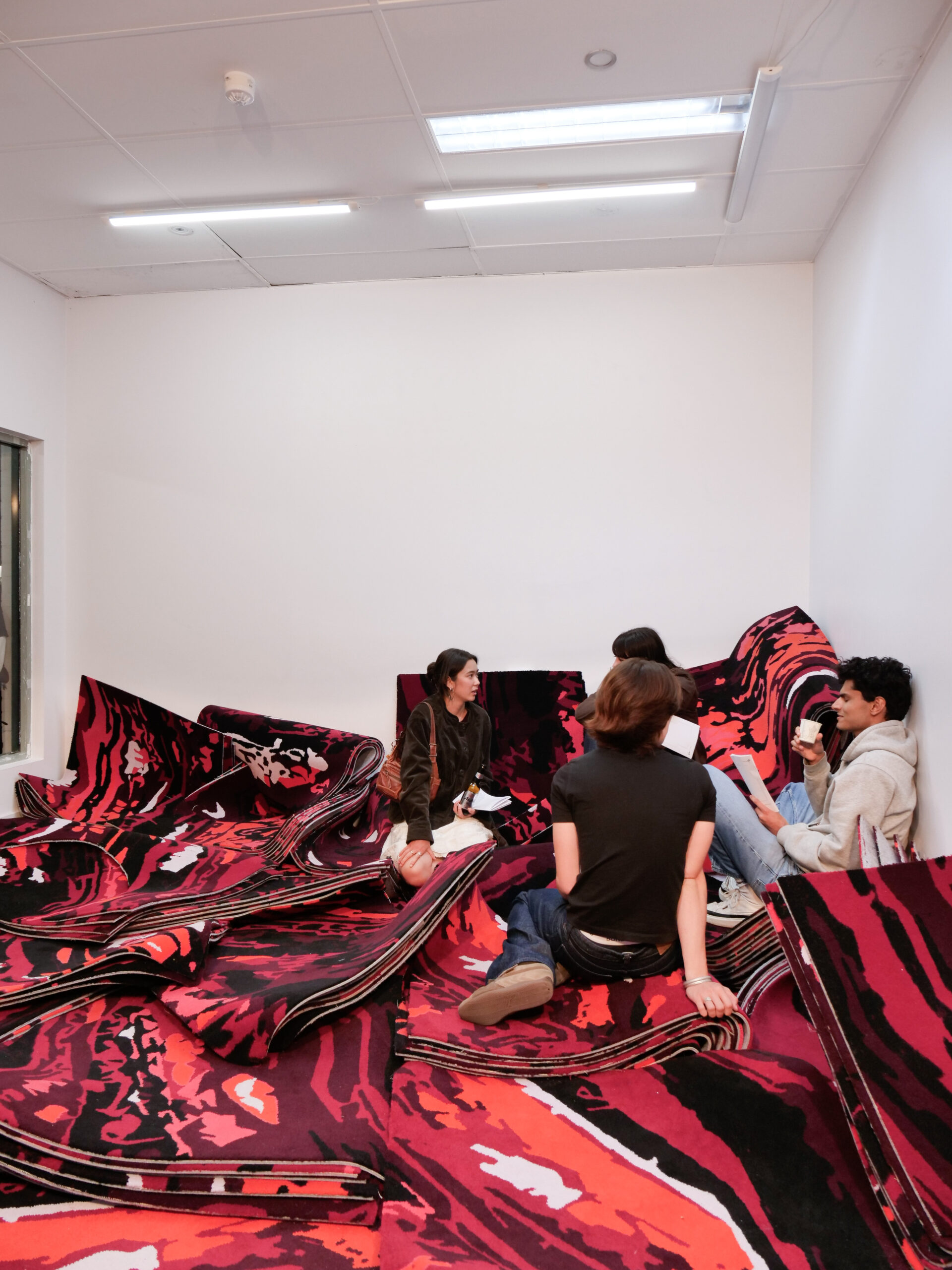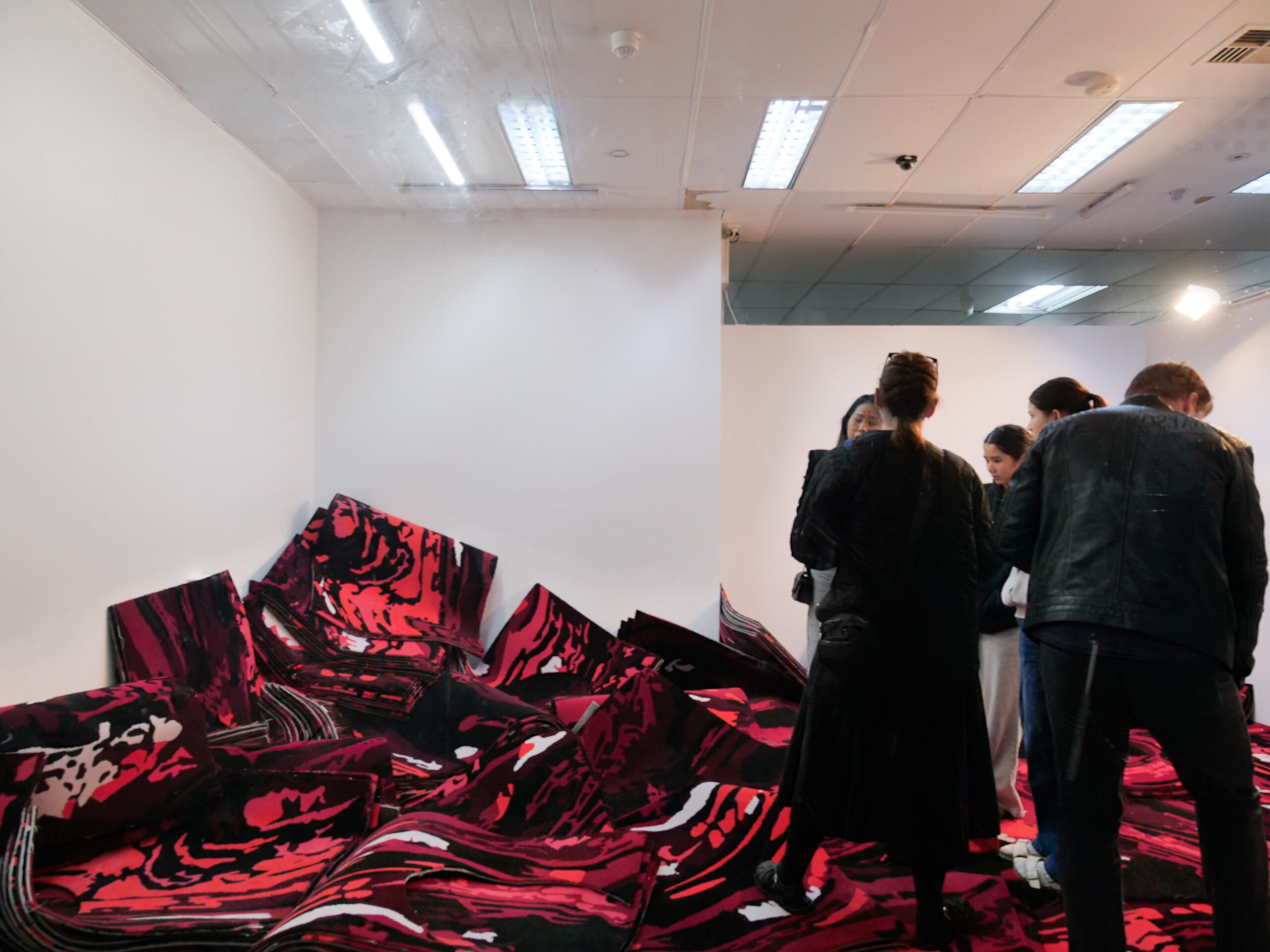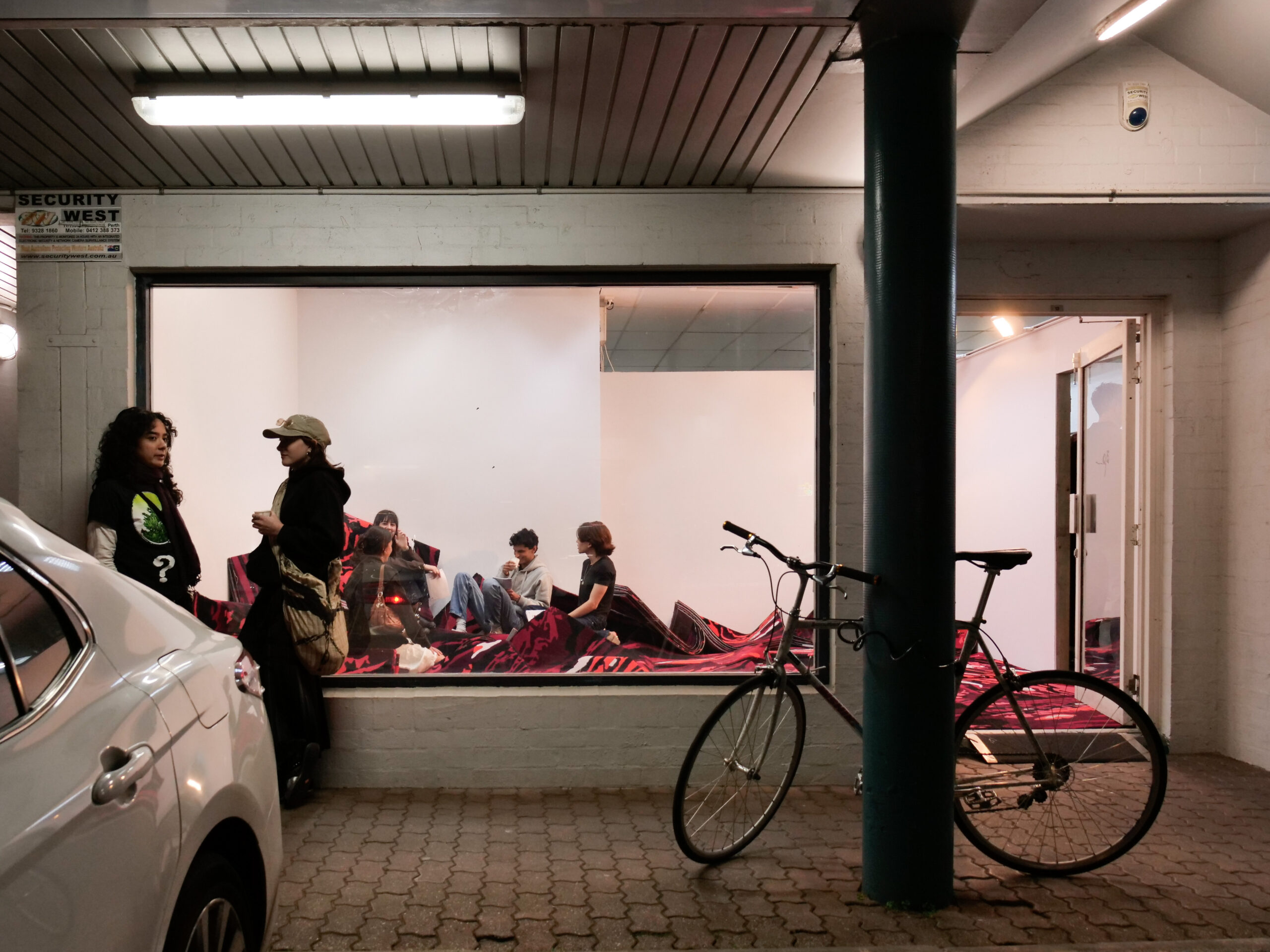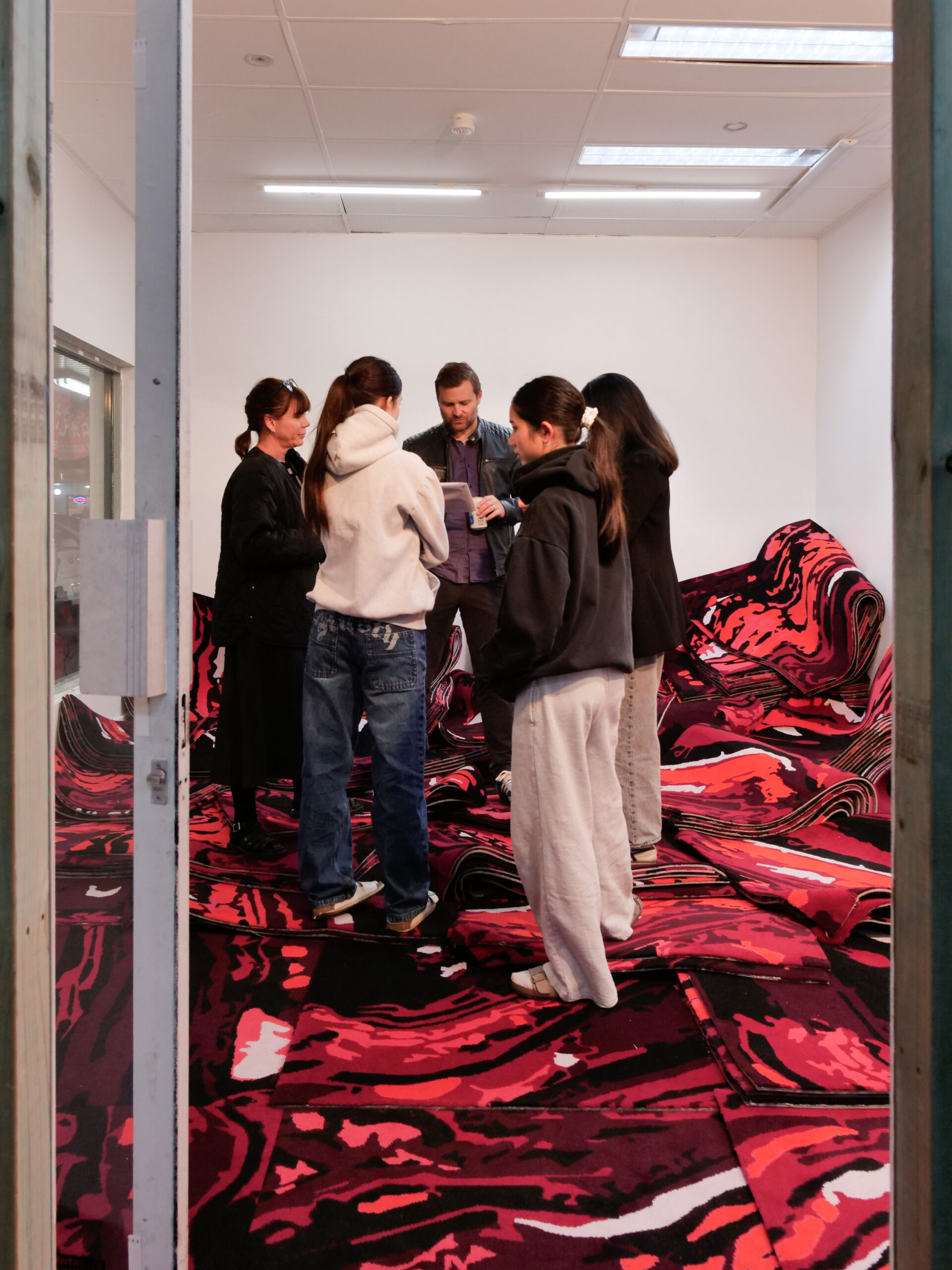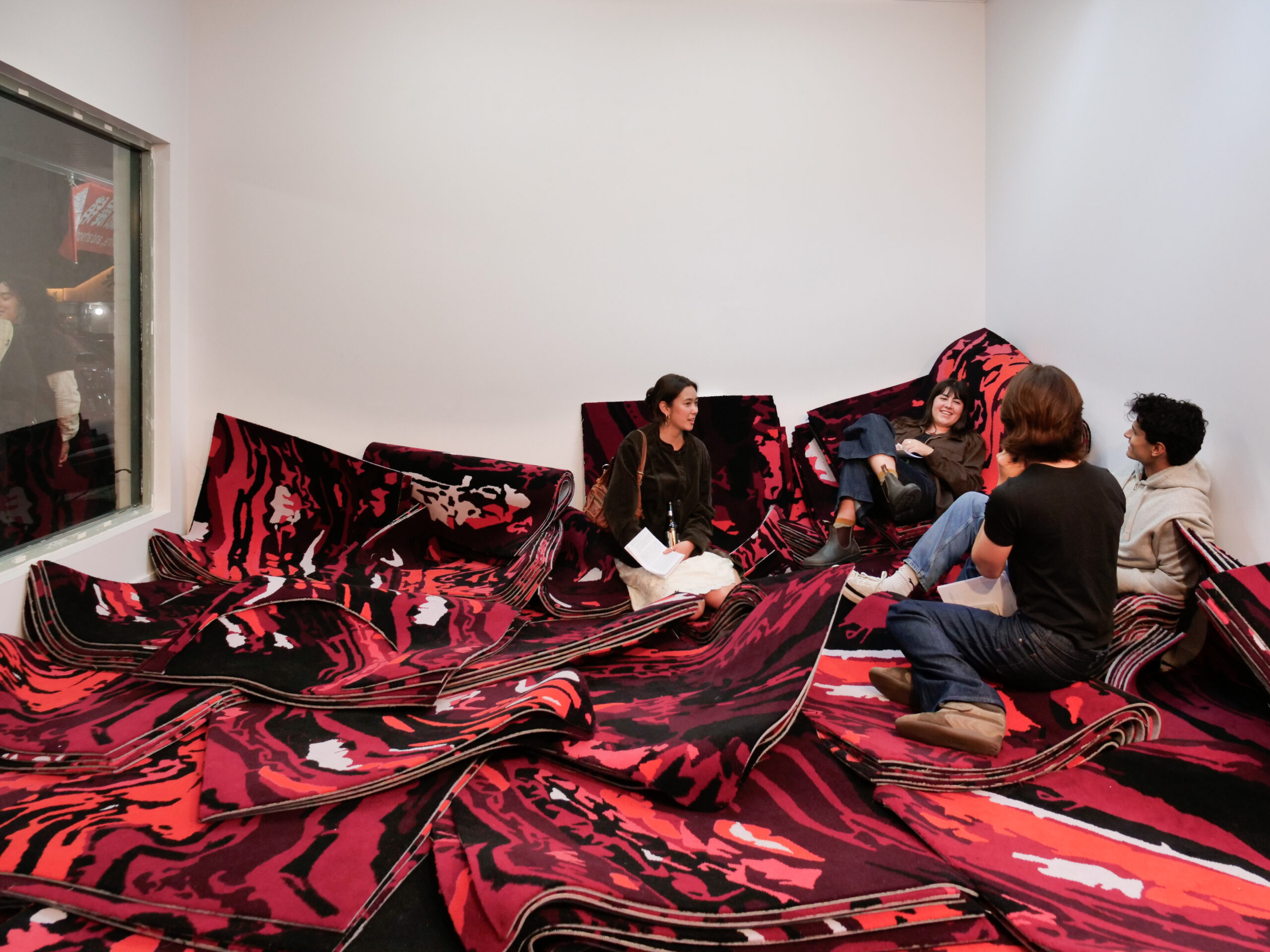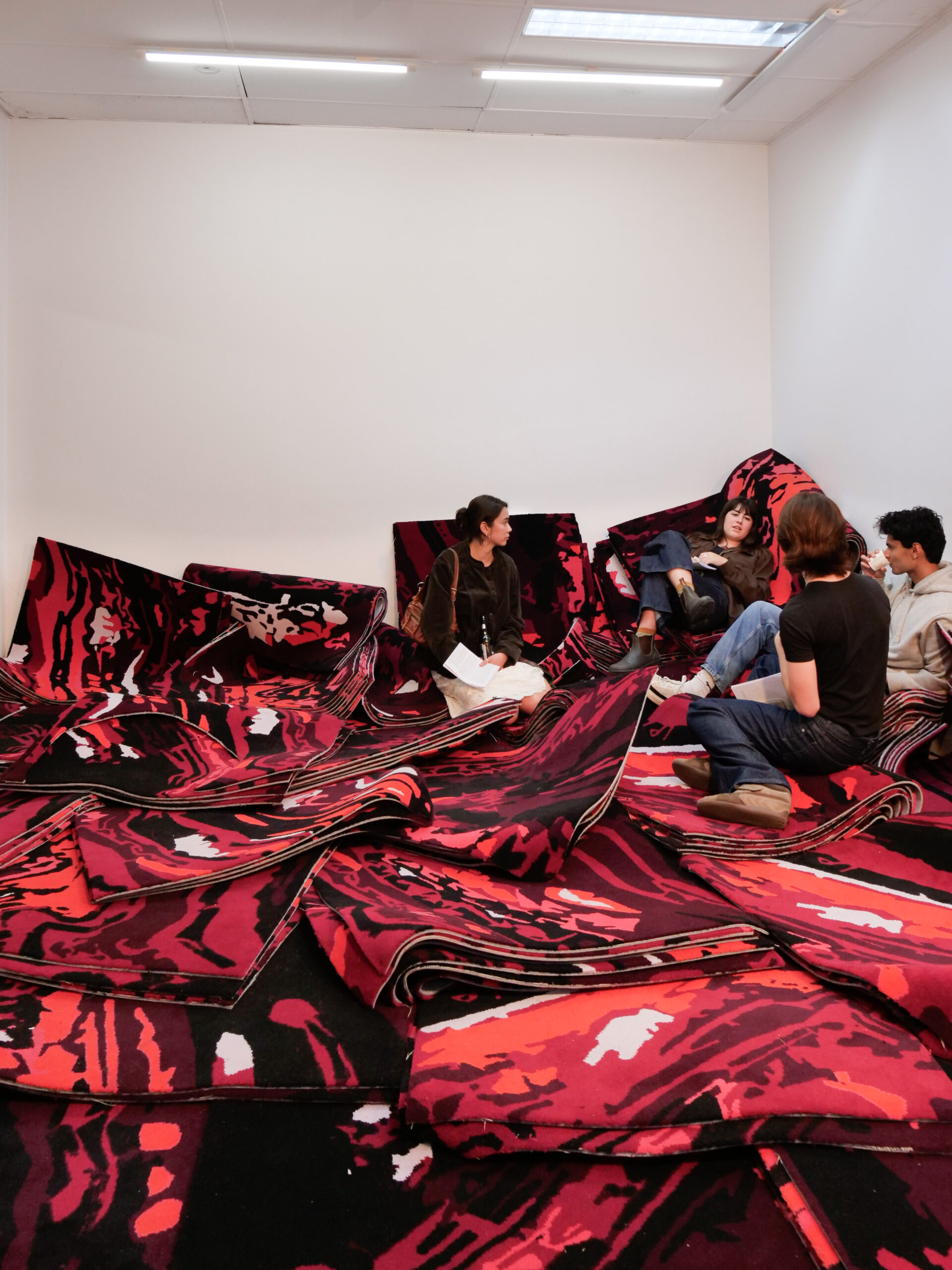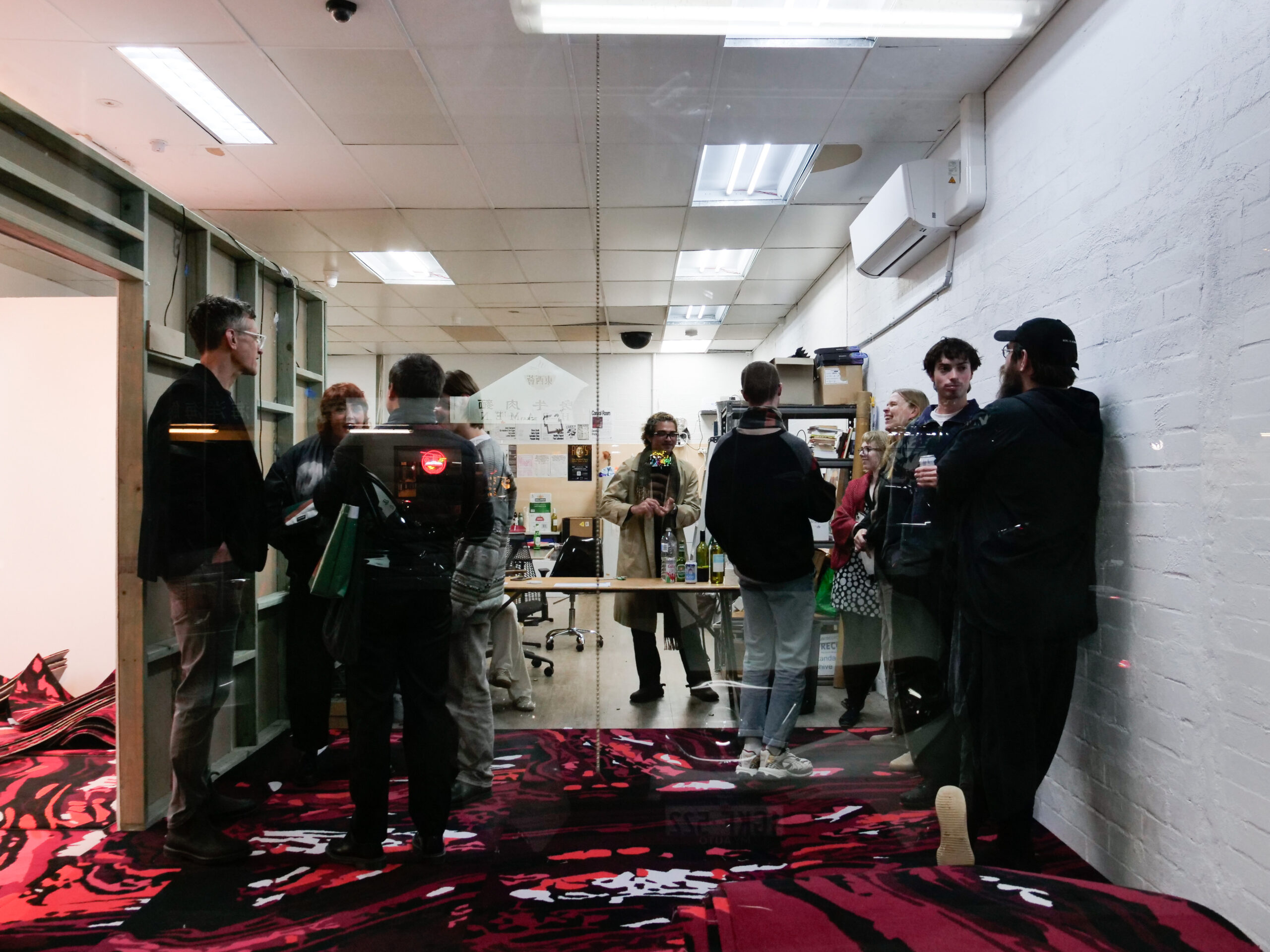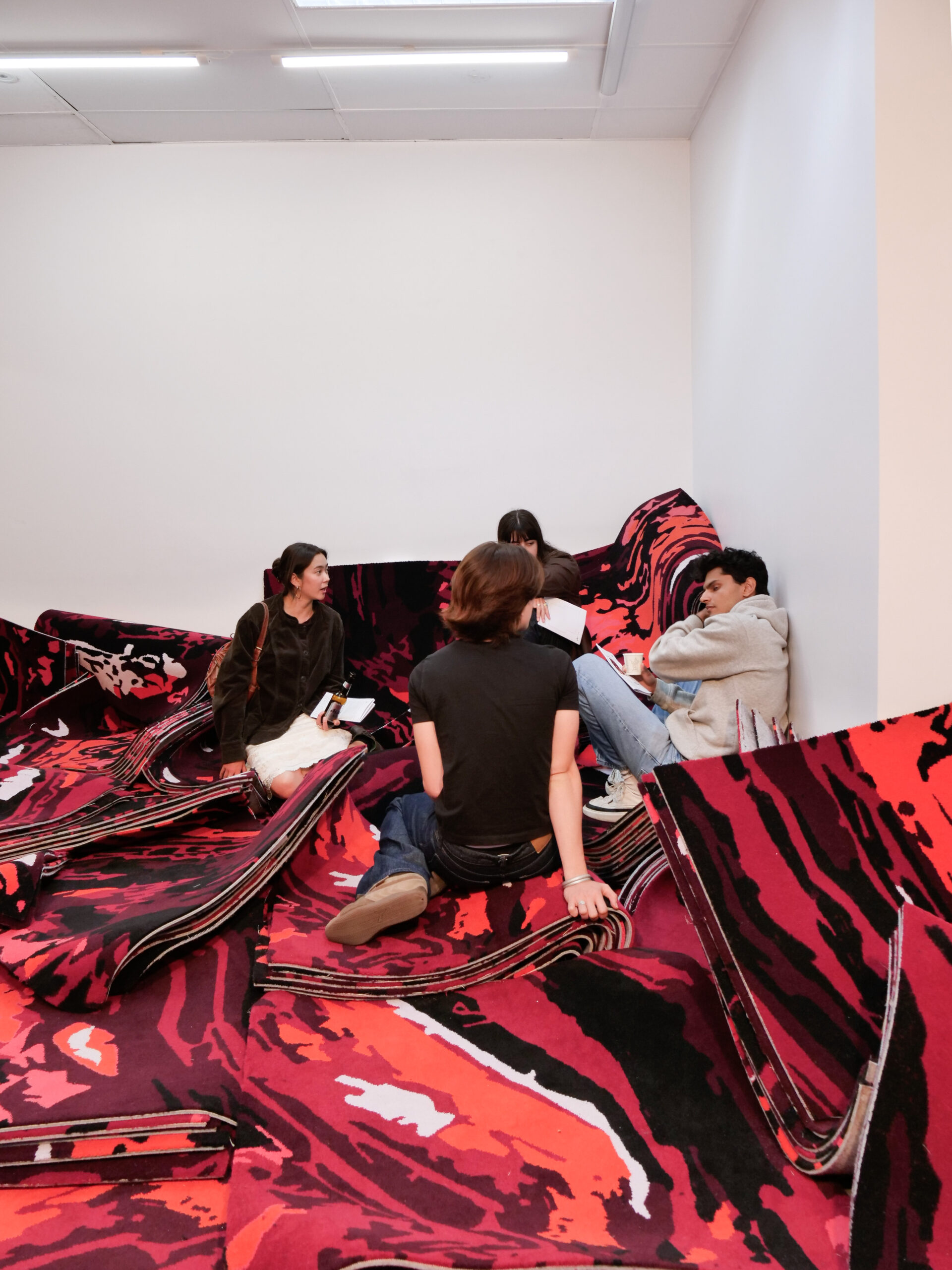
Control Room extends David Brazier’s Labour Patterns research, which examines how systems of labour organise bodies, materials, and environments, and how those processes become legible in form. In this installation, reclaimed carpet tiles from a corporate mining interior are treated not as neutral flooring but as a coded surface: modular, replaceable, and designed to support administrative control. Their red-black patterning carries a strong visual resonance with iron ore, folding the geology of extraction back into the corporate interior.
Across the gallery, this ordered field is gradually subjected to spatial pressure and repeated misalignment. What begins as a stable grid shifts incrementally through overlap, compression, and lift. Existing cuts and offcuts retain traces of fixtures and adjustments made to fit an earlier site, allowing the material to carry a residual spatial memory. Reconfigured within _____g.s, these fragments accumulate at moments of stress, where the floor begins to thicken, buckle, and rise.
Rather than representing labour directly, the work translates organisational structures into a bodily and architectural experience. A surface associated with order, efficiency, and control becomes unstable under pressure, suggesting how systems that appear seamless often contain the conditions of their own instability, as repeated misalignment accumulates toward structural failure.
David Brazier is a Boorloo/Perth-based contemporary artist working across sculpture, installation, and performance. His practice examines labour as a systemic and relational condition, focusing on how bodies and materials are organised, disciplined, and made productive. Through research-led and studio-based processes, he translates these dynamics into spatial and sculptural form.
Control Room‘s Catalogue: